
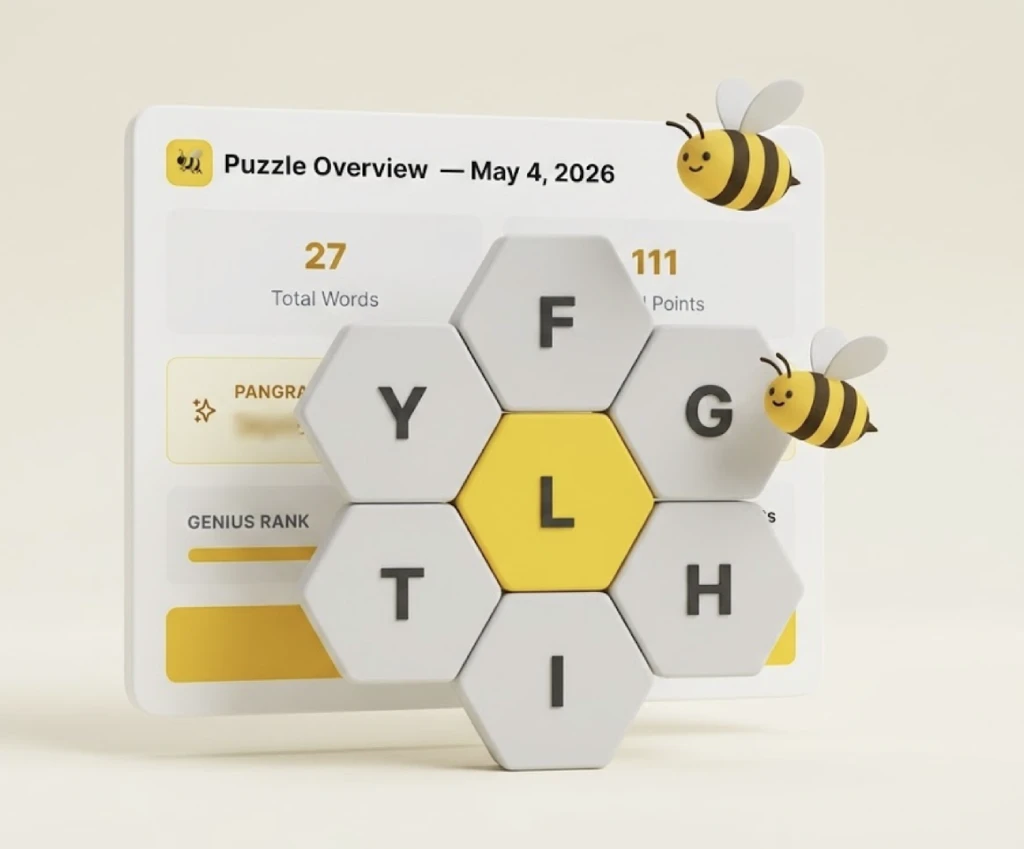
You type a word you have used for years. The hive buzzes “Not in word list.” The frustration is real—and the reason is not that English rejected you. The NYT Spelling Bee uses a hand-curated lexicon tuned for solvable, fair daily puzzles, not exhaustive dictionary coverage.
The Times has discussed dictionary philosophy with players, including in forum notes on Spelling Bee word choice. Think of the list as “words a broad audience might know,” not “every entry in Merriam-Webster.”
Not Scrabble—and Not School Bee Lists
Tournament Scrabble accepts obscure two-letter strings; Scripps school bees use study pamphlets. Spelling Bee sits between: harder than casual conversation, softer than OWL Scrabble. For school prep, use Scripps word lists; for NYT prep, study the archive.
The Common Usage Filter
Editors favor words encountered in general-interest reading: newspapers, novels, mainstream science writing. Hyper-specialized jargon may appear occasionally but not dominate solvers' experience. That is why difficult Bee words feel “real” yet unfamiliar.
Categories Usually Rejected
- Proper nouns and geographic names
- Hyphenated or apostrophe forms
- Slurs and offensive terms (explicit off-limits policy)
- Extremely obscure botanical or medical terms
| Your guess | Likely outcome |
|---|---|
| Brand name | Rejected |
| Common verb + ed | Often accepted if root is in list |
| Rare Latin species name | Usually rejected |
How to Suggest New Words
Follow our step-by-step suggest a word guide to submit candidates with citations. Community pressure does not auto-add words, but persistent, well-documented suggestions matter.
Strategy When the Dictionary Feels Random
When in doubt, check whether the word appeared in past puzzles using the solver or archive before assuming a bug. Pair dictionary knowledge with why wasn't my word accepted for edge cases.
Editorial Judgment Calls
Two editors can disagree on whether a word is “common enough.” That subjectivity explains apparent inconsistencies month to month. Editors also balance difficulty: a grid already full of jargon may drop another technical term to keep solvability fair.
Offensive and Sensitive Terms
The Times maintains standards excluding slurs and many sensitive terms regardless of dictionary presence. Players occasionally discover outdated entries removed after feedback—another reason archived answers can differ from memory.
Learning Acceptance Instead of Fighting It
Treat rejections as data about curator boundaries. Maintain a personal “Bee accepted” list sourced from puzzles you solved, not from general dictionaries. Over time that list predicts future accepts better than Merriam-Webster alone.
Frequency Heuristics Players Use
Experienced solvers guess acceptance by simulating editor taste: Is the word in a headline? Would a crossword editor clue it without a question mark? Would your non-puzzle friend recognize it in conversation? Those heuristics align with common usage even when you cannot read the internal list.
Regionalisms and Variant Spellings
Color vs. colour debates appear constantly. Assume U.S. newspaper standards unless the word is universally spelled one way globally. When traveling, switch mental dictionaries before playing to avoid frustration.
Negotiating With the Dictionary
You cannot negotiate mid-puzzle, but you can influence long-term lists via thoughtful suggestions with citations. Rage-tweeting rarely adds words; documented common usage examples do. Editors weigh whether a word appears in edited prose, not whether it appeared in your text message.
Acceptance also depends on puzzle fit: a word might be valid globally yet wrong for a specific hive’s difficulty budget. That is why seeing a word in Monday’s archive does not guarantee acceptance on a tiny Saturday list.
Build personal acceptance models: if three similar medical terms were accepted this month, a fourth is more likely than if zero appeared all year.
Closing Practices for Daily Players
Daily puzzles reward repeatable rituals more than sporadic marathons. Keep a single notebook for hive letters, tally notes, and one new word learned per session. Review the notebook weekly to see which suffixes and roots repeat—those repetitions are the real curriculum the editor teaches through letter selection.
Pair your reading habits with play: news articles, novels, and nonfiction expose you to vocabulary that reappears in hives. When you recognize a word from reading, log which letters made it possible. That connection turns passive reading into active Bee training without flashcard drudgery.
Share spoiler-light tips with friends—pair counts, bingo status, pangram length—rather than full lists. Social play stays fun when everyone still gets discovery moments. When you need structured help, use Spelling Bee Hub hints, archive pages, and solvers in that order so learning sticks.
Spelling Bee Hub Tools to Use Next
Turn strategy articles into action by opening the matching tool the same day. After reading about tallies, open the hints page and mark one pair to exhaustion. After reading about pangrams, filter the archive by pangram length. After reading about dictionary rules, test a questionable word in the solver before debating it online.
Bookmark three URLs: home for daily answers when learning, hints for structured nudges, and archive for pattern study. Rotating among them prevents over-reliance on full spoilers while still respecting your time when the hive fights back.
Finally, revisit this article in a month. The first read builds awareness; the second read—after dozens of hives—turns generic advice into personal habit. That spaced review mirrors how memory consolidates vocabulary in language learning research.
Frequently Asked Questions
Does Spelling Bee use Merriam-Webster?
Editors reference standard dictionaries but apply an additional common-usage filter.
Why are some plurals missing?
Curators sometimes omit inflections deemed too obscure for the day's set.
Can I appeal a rejection?
Use the in-game suggest-a-word flow documented in our suggest-a-word guide.