
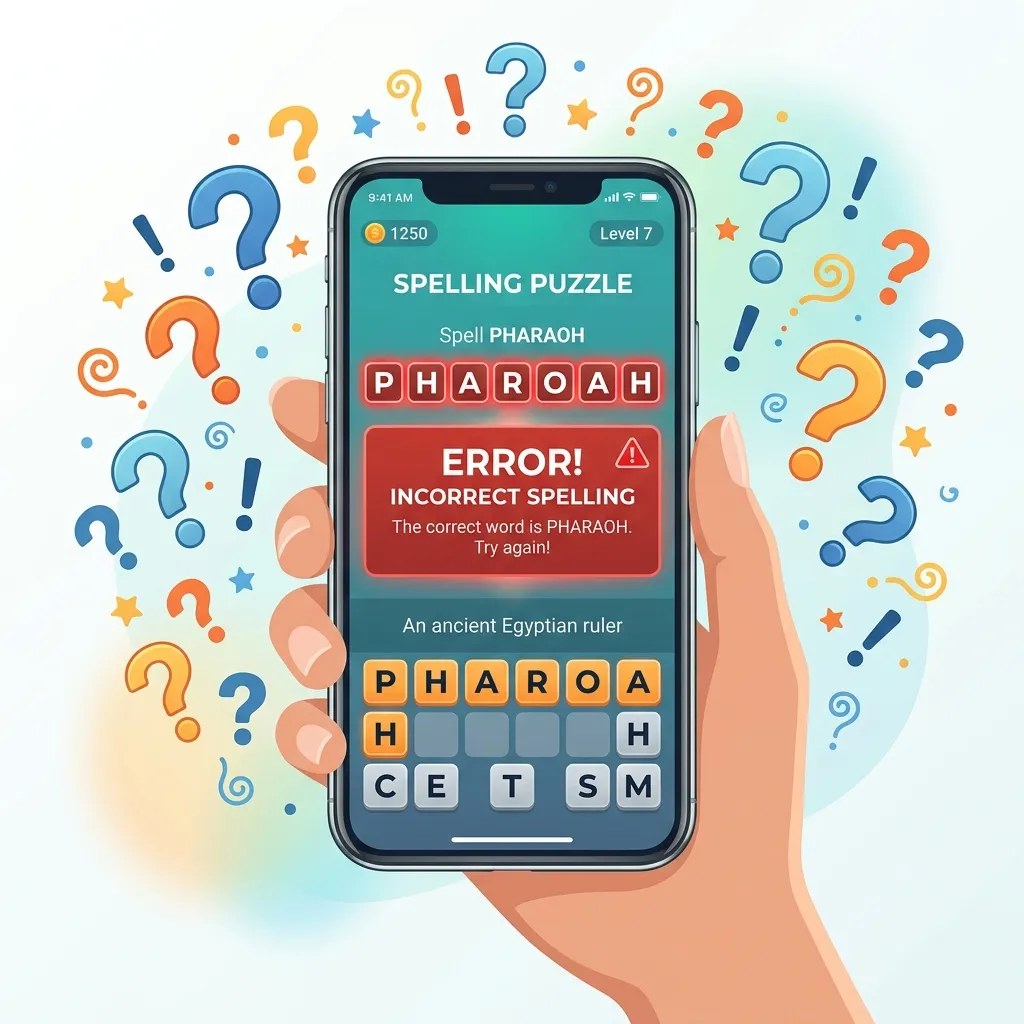
There's nothing more frustrating than typing in a word you know is real, hitting Enter, and being met with the dreaded "Word not in dictionary" error. If you're wondering why your word wasn't accepted in the Spelling Bee, you're not alone. The NYT has very specific, curated rules about what makes it into their official word list.
Table of Contents
Why Wasn't My Word Accepted: Obscure Words
The Spelling Bee does not use a comprehensive, unabridged dictionary like Scrabble does. Instead, editor Sam Ezersky curates the list to include only words that are generally familiar to a broad audience. If a word is highly specialized—such as complex medical terminology, obscure legal jargon, or hyper-specific scientific classifications—it will likely be rejected.
This curation keeps the game accessible, but it often frustrates experts who know valid prefixes and suffixes that technically form real, albeit obscure, dictionary words.
Proper Nouns and Capitalization
A strict rule of the NYT Spelling Bee is that it does not accept proper nouns. If a word requires capitalization (like names of countries, brands, or specific historical figures), it will not be accepted. However, there are exceptions for eponyms—words derived from names that have entered common usage in lowercase (like "boycott" or "pasteurize").
Profanity, Slang, and Hyphenated Words
As a family-friendly game published by a major newspaper, the Spelling Bee strictly excludes profanity, slurs, and highly offensive language. Additionally, the game engine does not support punctuation, meaning hyphenated words (like "mother-in-law") are fundamentally incompatible with the input system.
Slang is a gray area. While highly established colloquialisms sometimes make the cut, trendy internet slang usually takes years to be recognized by the editors.
How to Deal With Rejections
When your word is rejected, the best strategy is to pivot. Don't waste time trying variations of an obscure root. Instead, look at the center letter and try to form common verb endings. If you are struggling to find valid words, consider checking out our 15-minute genius workflow for a systematic approach to finding words the NYT actually accepts.
You can also return to the Spelling Bee Hub homepage to use our daily hint tools when the dictionary curation gets too frustrating!
The Sam Ezersky Factor: Who Decides the Dictionary?
The final arbiter of what constitutes a valid word in the New York Times Spelling Bee is Sam Ezersky, the digital puzzles editor. Unlike Scrabble, which relies on a rigid, formalized tournament dictionary (the Official Scrabble Players Dictionary), Ezersky curates the Bee's word list manually. His goal is to strike a delicate balance between challenging players and ensuring the game remains accessible to a mainstream audience.
This curation process means the dictionary is inherently subjective. Ezersky frequently removes words that he deems too arcane, regional, or highly specialized. For example, while a botanist might be intimately familiar with a specific genus of plant, if the average subscriber has never heard of it, it will likely be excluded. This editorial philosophy frequently sparks debates on social media, where players will passionately argue that their perfectly valid obscure word should have been accepted.
It also means the dictionary evolves. Words that were previously rejected have occasionally been added in subsequent years as they enter the broader cultural lexicon, demonstrating that the Bee's dictionary is a living, breathing entity rather than a static rulebook.
Frequently Asked Questions About Word Rejections
Why are chemical elements sometimes rejected?
While common elements like "IRON" or "GOLD" are accepted, highly obscure elements on the periodic table are often rejected because they fall under the category of highly technical or specialized jargon that the average player would not know.
Does the game accept British spellings?
Generally, no. The New York Times is an American publication, and the Spelling Bee relies almost exclusively on American standard spellings. Words like "COLOUR" or "FLAVOUR" will typically be rejected in favor of their American counterparts.
Can I suggest a word to be added?
Yes! The NYT puzzles team is very active on social media (particularly Twitter/X). Players frequently tweet at Sam Ezersky to advocate for specific words. While there is no guarantee, strong community feedback has influenced the inclusion of certain words in the past.